


WASHINGTON 鈥� At the height of the AIDS epidemic, was a clinic scarred by death. Today, it’s reborn as a place that celebrates life and light.
For Whitman-Walker, it鈥檚 been a long and intense journey down 14th Street. The original clinic was a cramped, dark building that primarily served D.C.鈥檚 HIV/AIDS population. Now, it鈥檚 evolved into a new state-of-the-art health center that services the whole community.
“You couldn’t have more polar opposites,” says Justin Goforth, director of community relations at Whitman-Walker.
Goforth first came to the clinic as an HIV-positive聽patient, and eventually made it the place of his career.
He stands in the empty street-level pharmacy, just days before the shelves are filled and the first patients arrive.
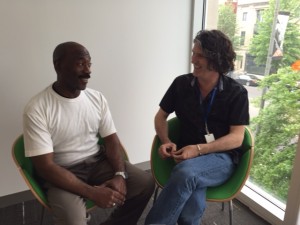
“Compare where we are in this space to where we were in the late 鈥�80s, early 鈥�90s, where it was nothing but sick care and death and dying,鈥� he says.
鈥淭his is about vitality, health and wellness,鈥� he adds, watching the sunlight pour through the front windows.
Goforth says the new health center is the first in the area to be built specifically to meet the requirements of the Affordable Care Act. It places an emphasis on preventive and wellness care and utilizes high-tech electronic medical records.
The building is white and airy,聽with colored tiles made out of recycled plastic bottles used to differentiate the聽various medical teams at work in the five-floor, 42,000 square foot structure.
“I think it is really going to change some lives,鈥� Goforth says. “I just want to stand and see the looks on聽the patients鈥� faces when they experience this place.”
It was a jaw-dropping event for one patient who had a sneak peek of the clinic.
“I am in awe!” says Michael Jones, who was diagnosed with the HIV at Whitman-Walker in 1992. He slowly walks past the last bits of construction rubble, and reflects on the changes he has seen in the last two decades.
“Whitman-Walker has definitely saved my life,” he says.
Jones says he has learned how to live 鈥� and even thrive 鈥� with the AIDS virus, and that its聽diagnosis no longer a death sentence.
It is this shift聽鈥� from dying with AIDS to living wi迟丑听HIV 鈥� that has enabled Whitman-Walker to evolve from a crisis model聽to聽a full-service health care聽provider.
The new health center, located at 1525 14迟丑听Street NW, will have twice as many exam rooms as the old clinic, and three times the number of dental chairs. It will also offer wellness services, such as acupuncture and nutritional counseling.
Over the years, as HIV became treatable, Whitman-Walker’s patients got healthier and so did it’s bottom line. After years of聽scraping by, it’s聽now making a bit of a profit 鈥� enough聽to put a big chunk toward the $9.8 million cost of the new building.
That鈥檚 because today,聽almost all聽of聽the patients聽who come to Whitman-Walker have private insurance, Medicaid or Medicare; only 2 to 3 percent are uninsured, which is a big shift from the early days.
In the past six years, the clinic鈥檚 patient base has nearly doubled, and the center expects that base to continue to grow as more patients access care through health care reform.
Currently, most of the clinic鈥檚 patients are HIV-free, which is another major change from previous decades.
Whitman-Walker鈥檚聽focus remains on treating Washington鈥檚 LGBT community, although聽the center聽is open to all.
Goforth says anyone who walks through the doors of the new building will get the same聽individualized care. That鈥檚 something that has not changed since the聽earliest days聽of the AIDS epidemic, when patients聽came to Whitman-Walker and found the care and compassion that they couldn鈥檛 find elsewhere.


