
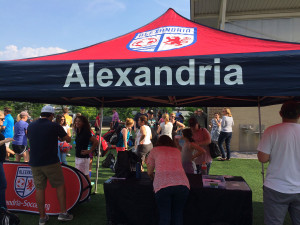
ALEXANDRIA, Va. 鈥斅營t鈥檚 a steamy, spring afternoon a block聽off the main drag of Duke Street, just south of the Capital Beltway, where bright colored cones and nets are staggered across a large artificial turf field. There鈥檚 room for dozens of young soccer players to be split between a couple handfuls of games, as they try out in front of coaches to determine placement in the upcoming Alexandria Soccer Association (ASA) leagues. But there are large swaths of empty space between groups.
The reasons why the fields aren鈥檛 as full as hoped are layered, but they stem from the same root issue. Late last summer, U.S. Soccer announced that it would be switching its calendar from one based on the school year to one based on the calendar year, to better align itself with the international soccer calendar.
鈥淥verall, the two things this accomplishes is it makes things easier and it gets us on the same calendar with the rest of the world,鈥� said U.S. Youth Technical Director and U-20 Men鈥檚 National Team Coach Tab Ramos at the time.
鈥淪o now it becomes easier to identify for U.S. National Teams and everything else when it comes to international soccer.鈥�
While that may be true, the players that make up the teams that compete on an international level are a fraction of a percent of the millions involved in youth soccer. And there are other, very real repercussions of the calendar change that are impacting players, parents and coaches across the country right now.
鈥淭he design previously was so that they could play with their classmates, play with their friends from school,” explained Tommy Park, ASA executive director as well as a DeMatha graduate and longtime coach at the school.
鈥淭he mandate has basically taken each miniature community that has formed on these teams 鈥斅爐hese best friend bonds, where parents are very tight, and coaches who have helped support them, whether it be recreational or competitive 鈥斅燼nd said that we鈥檙e going to chop four months into it and split them up.鈥�
For competitive leagues, players born between the old Aug. 1 deadline and the new Jan. 1 deadline face the prospect of having to skip a level, jumping straight from a U7 recreational league to a U9 travel league, for instance, the first level where the mandate applies in Alexandria. That has scared some away from trying out, for fear of being unable to keep up physically. Where the ASA had 60 girls and 120 boys at tryouts last year, they have only 40 and 90 this year, respectively.
鈥淔or us, as we try to plan and really try to build a base of kids to play soccer year round, that鈥檚 a huge impact,鈥� Park said. 鈥淚 don鈥檛 think they thought that part of it through.鈥�
ASA is fortunate聽to be one of the five largest clubs in the area, with over 4,000 participants. At some of the levels most affected by the new mandate, this has led to influx of enrollment in Alexandria, as kids from smaller clubs have moved over to those with more institutional support. But another fallout from the mandate affecting leagues large and small is that it splits up teams that have grown up playing together for years.
鈥淚 think the social side of the club sport is definitely something that needs to be addressed,鈥� said Ryan Alexander, who coaches the U14 and U15 ASA girls teams, as well as the girls varsity team at Sidwell Friends.
鈥淭his is not a professional academy. This is not Manchester United, where we鈥檙e trying to mine two players to make the first team. There鈥檚 real life relationships and friendships.鈥�
James Doyle is an ASA recreational age group coordinator, but also a parent of three soccer-playing kids. His eldest daughter is affected by the new mandate, jumping up from a U12 to a U14 league this year. He鈥檚 less worried about her transition on the field than off of it.
鈥淚 think that鈥檚 going to be a little bit of a social impact, playing with some girls she doesn鈥檛 know,鈥� he said, but noted that Alexandria is lucky to have a fairly tight-knit soccer community.
鈥淚 think the parents are more concerned about this than the kids are.鈥�
Parents have reason to be concerned from a competition standpoint as well. For kids pushed up by the deadline who haven鈥檛 physically matured as fast as their peers, there may be some serious intimidation about their ability to even play competitively this year.
鈥淭hey may or may not be at a comfort level to even make a team,鈥� Park said. 鈥淚 think a lot of smaller clubs aren鈥檛 in position to support them, so they鈥檙e going to be cut out right away.鈥�
On the other end of the spectrum, the most talented players face uncertainty as well. Teams that have grown together and succeeded in the past, rising into the top 50 nationally, are suddenly facing an unknown future, with a large percentage of their team being reassigned to another age group.
鈥淭he opportunities that they鈥檝e been working to create, such as playing in a regional league or tournament, or a national final, are now threatened,鈥� Park said.
That, in turn, has caused a groundswell of players considering leaving their organization entirely, looking for other clubs that might fit better. Alexander sees that as the biggest seismic shift caused by the deadline change.
鈥淚t has forced a lot of people to look at other clubs,鈥� he said. 鈥淚 think this year pushed a lot of people to explore that more than in years past.鈥�
Because it鈥檚 not just about winning. Good teams attract more attention from college coaches, who recruit far more heavily from the club side than from high schools. When college scholarships are potentially at stake, players may be more inclined to start over in a new league.
U.S. Soccer did not respond to a request for comment about the affect the new mandate is having on youth soccer by the time of publication. But by angry parents and coaches from Ohio to Tennessee to California shows that teams across the country are feeling the same pressures.
Park says he and his team have done the best to preach the positives to his group 鈥斅爐he opportunity to make new friends, build different relationships, come together as a community 鈥斅燽ut that it鈥檚 a tough sell when such a change is intended to benefit such a small group of players at the expense of the masses.
鈥淲e have 99 percent of the other kids playing soccer, and they鈥檙e not impacted by the international experience,鈥� he said.
鈥淚f there was a reason that we could support, it would be easier. But in this case, nobody鈥檚 really sure why we would change our younger kids to a system that makes no sense.鈥�


