
WASHINGTON 鈥� If you聽see聽folks聽dancing in the street on Pennsylvania Avenue, it’s surely because our聽nation’s capital just聽became Hitsville, USA.
Legendary Motown founder Berry Gordy brings his Broadway smash聽” to聽National Theatre now through Jan. 3 as part of the U.S. national tour.
Guarantee: you won’t be able to sit still the entire show because you’ll be聽dancing in your seat.
Like “Jersey Boys” and “Beautiful,” the show is a jukebox musical,聽written by the 86-year-old Gordy based on his 1994 autobiography聽“To Be Loved: The Music, the Magic, the Memories of Motown.”
Directed by聽Charles Randolph-Wright, the show spans six decades from the聽1930s through the 1980s, charting聽Gordy’s聽rise from an aspiring boxer, to his聽founding of the Motown record label, to his working relationships with music icons such as聽Diana Ross, Smokey Robinson, Marvin Gaye and Michael Jackson, all within the framing device of the “Motown 25”聽reunion special in 1983.
“People say, ‘Is聽it the Berry Gordy story, or is it the Motown story?’ And I say, ‘Well, it’s both.’ Every artist has their view of how it happened, and this is his view,”聽Randolph-Wright tells 海角社区app.
The musical had no shortage of hits to select from the unrivaled Motown catalog.聽The label has聽produced more than 525 albums and 180 No. 1聽hit songs worldwide, starting with The Miracles’ “Shop Around” on the R&B chart and The Marvelettes’聽“Mr. Postman”聽on the Billboard pop chart.
Whittling it down seems nearly impossible. With聽so many famous hits, which songs do you pick?
“Which ones fit the story better. It’s all about the story, and the songs are part of it. There’s story songs, there’s entertainment songs, and there’s other songs that fill in the background or whatever, but each song has a purpose and we tried to take the songs that we loved and fit. … ‘My Girl,’ for instance, it fits the story of what’s going on and it’s very dramatic,” Gordy tells 海角社区app.
Thus, the songbook includes more than 40 classic hits,聽including聽The Temptations’ “Ain’t Too Proud to Beg,” The Four Tops’ “I Can’t Help Myself,” The Supremes’ “Stop! In the Name of Love,” Martha & The Vandellas’ “Dancing in the Street,” Smokey Robinson & The Miracles’ “You Really Got a Hold On Me,” The Jackson Five’s “I Want You Back” and Stevie Wonder’s “Signed, Sealed, Delivered.”
“I’ve never worked on a show that every song that I cut, I wanted to keep in the show. Typically, a musical tells you, oh you don’t need this, this doesn’t work, but even the songs we cut were so great because they’re all classic hits,”聽Randolph-Wright聽says.
The musical also includes three songs written just for the show by Gordy and Michael Lovesmith: “Can I Close the Door,” “Hey Joe (Black Like Me)” and “It’s What’s in the Groove That Counts.”
For those who don’t know, Gordy was a successful songwriter prior to his producing prowess 鈥� a vocation ironically inspired by a simple聽trip to聽the movies to see Doris Day.
“She was America’s girl next door. I saw her in a movie with Danny Thomas called ‘I’ll See You in My Dreams,’ and I wanted to be a songwriter, and he聽was a songwriter (in the movie) … so I wrote this beautiful song called ‘You Are You,'”聽Gordy says.
From there, Gordy began penning聽hits for major stars, including Jackie Wilson’s “Reet Petite” (1957) and “Lonely Teardrops” (1958) and Etta James’ “All I Could Do Was Cry”聽(1960).
He聽says his early聽songwriting was聽inspired by聽primal wants and needs to which everyone could relate.
“When I started, all I wanted to do was make some music, make some money, and meet some girls. It was not to be a mogul or this or that. So I fell in love with songs those kinds of songs that were heartbreaking,” Gordy says.
“Other guys were stealing my girls before I even got them. I was not tall enough, I was not short enough, I couldn’t dance well enough, and that’s why I wrote the song, ‘Do You Love Me’ by The Contours. I said, ‘You broke my heart because I couldn’t dance. You didn’t even want me around. Now I’m back, to let you know, I can really shake ’em down!'”
“It became a hit and I started getting girls, and the next thing I know, I needed something to take them out with. I needed money! So I wrote a song called ‘Money.’聽‘Your love give me such a thrill, but your love won’t pay my bill! I need some money!’
Originally recorded by Barrett Strong in 1959,聽the song was later聽covered by everyone from The Beatles to The Rolling Stones, from The Doors to The Kingsmen.
As the hits just kept on rolling, the聽songwriting evolved into producing, as Gordy founded Tamla Records in聽1959, and incorporated as Motown Record Corporation in聽1960. Like the Hollywood studio system of the 1930s and 1940s, Gordy had created the same process for music, cranking out commercial hits聽with the efficiency of a Detroit automobile factory, where he once worked.
“That’s what it was, an assembly line,” Gordy says.
How did he聽allow room for creative expression amid such a well-oiled machine?
“First of all, the boss has to be creative. … We were so confident we were gonna make it that we had a charm school. ‘When we make it, you gotta know how to shake the queen’s hand.’ They said, ‘That is the craziest thing we’ve ever heard of,’ and sure enough, The Supremes met the queen. … We had those crazy dreams and we believed in people.聽When you believe in them, they make it happen. …聽That’s been the philosophy of my life. …聽You’re great, he’s great, everybody I see, they’re great at something. It’s up to me to figure out what that is and help them perpetuate it to become the best.”
https://www.youtube.com/watch?v=izzKUoxL11E
Not only did聽Gordy聽help each individual artist become great at what they did, he inspired the entire nation 鈥� and world entire 鈥� to become morally greater in聽how people treat each other. Across all races, religions, nationalities and backgrounds, Gordy understood that music was the great equalizer.
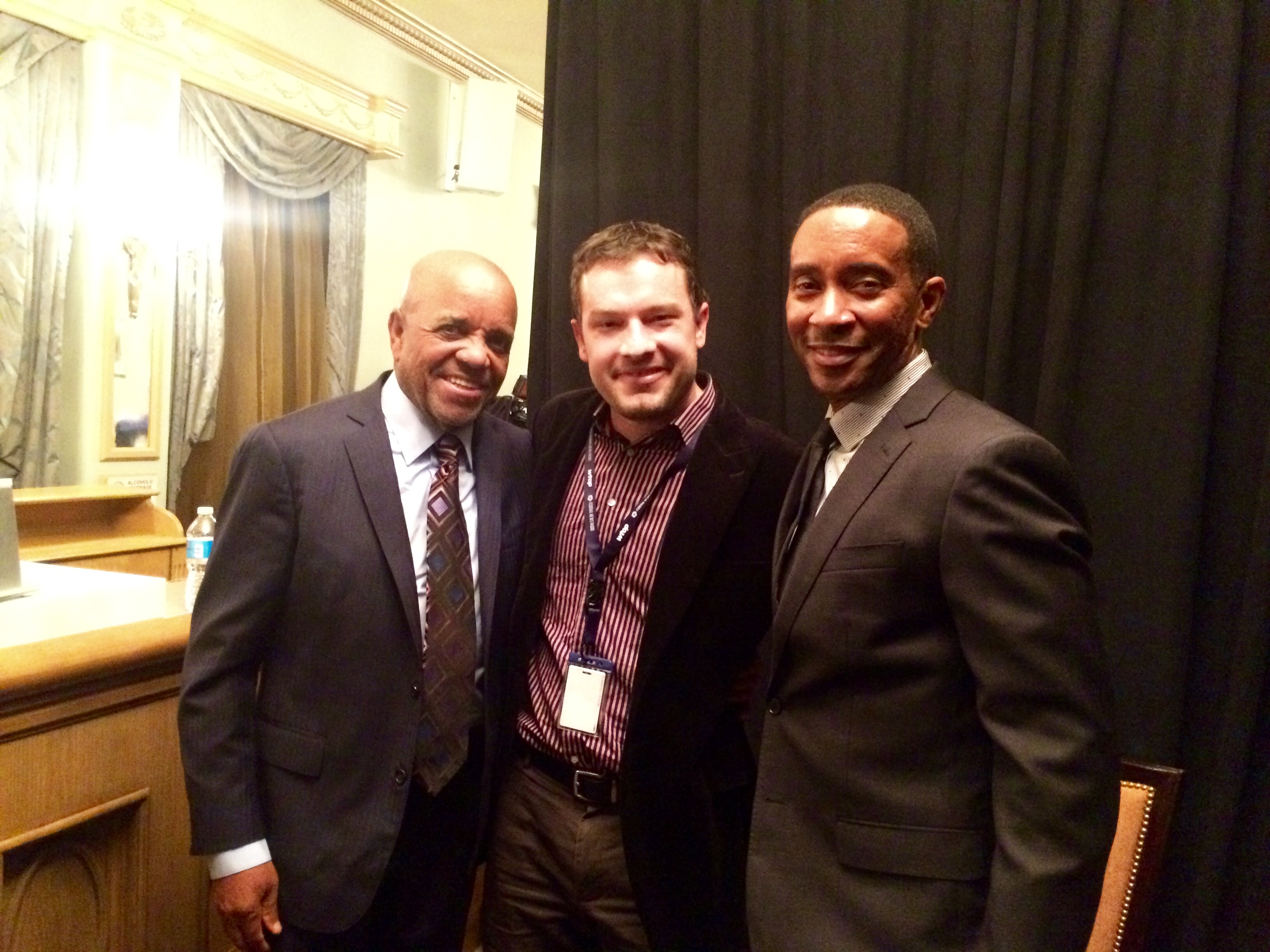
“I mean, here you are relating to it, and you’re almost white,” Gordy says, laughing. “It related to everybody, so I said, I want the world to know these songs, because we all feel the same.”
It’s this spirit that聽Randolph-Wright wanted to capture on stage in “Motown the Musical.”
“We have so much more in common than we have dissimilar. …聽It’s still relevant. You hear ‘What’s Going On,’ what song talks about what we’re dealing with right now better than that song? To be able to tell that musically at this time on stage is so important, because when Motown years ago happened, the country was very divided, and this music brought people together.”
“We need that again and we’re doing that again. That was my hope for the show, so to see that happen all over the country,聽opening in London, then going back to Broadway, its聽been thrilling.”


