
This article was republished with permission from 海角社区app’s news partners at . Read the story at Maryland Matters.
This content was republished with permission from 海角社区app鈥檚 news partners at Maryland Matters. Sign up for today.
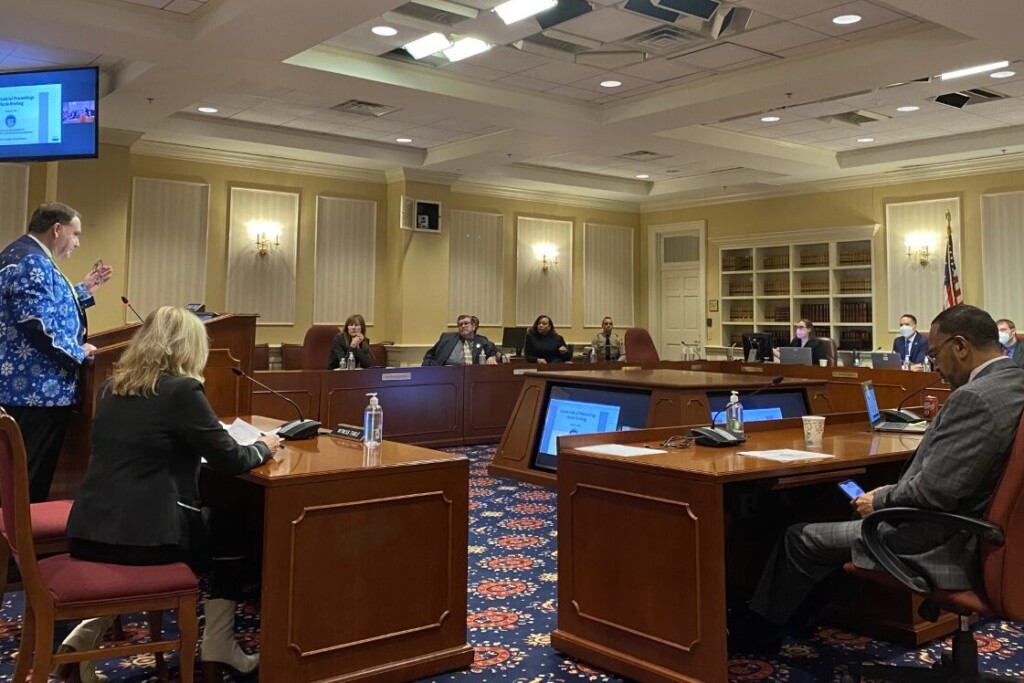
It鈥檚 known that Maryland has聽聽of young Black men. The Justice Policy Institute, which released a report on that issue in 2020, now plans to release a report soon that assesses the state鈥檚 parole system.
Ryan King, director of research and policy for the institute, said a comprehensive assessment of the parole system was last done in January 1935 by the Baltimore Criminal Justice Commission.
鈥淩eviewing this sadly, 90 years later, many of the concerns that were flagged in that report remain as issues and concerns now,鈥� he told members of the Senate Judicial Proceedings Committee on Thursday.
It marked the committee鈥檚 first briefing during the 90-day legislative session that began Wednesday.
A copy of the report wasn鈥檛 made available Thursday, but King summarized some data from the state鈥檚 Department of Public Safety and Correctional Services, the state鈥檚 Parole Commission, interviews with attorneys, criminal justice advocates and residents who went through the parole system.
Out of slightly more than 21,000 parole hearings held since 2016, approximately 8,141 formerly incarcerated people were granted parole.
However, more than 5,800 were refused.
William Hamilton, 47, of Baltimore City, was released seven months ago after being charged at 16 and serving about 30 years on a murder conviction, and having appeared before the parole commission five times.
One problem with parole, he said, is that parolees are often released without preparing them to be productive and stable outside prison.
鈥淲e were sent to an institution with no programs. There鈥檚 no vocational training of any [kind],鈥� Hamilton said.
That鈥檚 why, King said, the justice institute proposes that Maryland adopt some 鈥渂est practices鈥� that include making more transparent a parole process that is 鈥渙ften cloaked in secrecy;鈥� fully documenting reasons a person is denied parole rather than writing only a few sentences; ensuring that members of the 10-member parole commission don鈥檛 exclusively have backgrounds in law enforcement; and expanding eligibility for compassionate release, including for inmates who are 50 years and older, a cohort that comprises 6% of the state鈥檚 prison population.
David Blumberg, chair of the state鈥檚 Parole Commission, disagreed with a few of the institute鈥檚 recommendations for improving the parole system.
As for the backgrounds of commission members, Blumberg said state law requires appointees to have not just training and experience in the law, but also in social work, education, or psychology.
He said people eligible for a parole hearing 鈥渁re automatically鈥� scheduled for one and don鈥檛 have to request it.
Later the committee鈥檚 discussion turned to eligibility for geriatric parole, which the state makes possible for prisoners who are 60 and older.
Sen. Shelly Hettleman (D-Baltimore County)聽聽last year that sought to release more inmates who fit that criteria, but it didn鈥檛 advance.
鈥淒o you think it鈥檇 be helpful if we took another look at that bill this year?鈥� asked Sen. Chris West (R-Baltimore County).
Before Blumberg answered, he turned from the lectern toward several supporters of the policy institute鈥檚 recommendations who nodded their heads in approval.
鈥淚f the bill comes before us, we would be happy to consider it,鈥� the parole commission鈥檚 chair said.
Blumberg also briefed the committee about state statistics relating to the state鈥檚 parole and prison system.
According to a report from the Maryland Department of Public Safety and Correctional Services, not even 10% of parolees released from prison returned between 2016 and 2019 because of 鈥渁 new sentenced offense.鈥�
Blumberg said the department plans to hire another psychologist by Tuesday to help complete a backlog of risk assessments, which are done to determine a person鈥檚 mental well-being.
Meanwhile, Sen. Jill Carter (D-Baltimore City) is聽聽that would repeal the governor鈥檚 power to overrule a decision by the commission to grant medical parole to an inmate serving a life sentence. The bill is cross-filed with Del. J. Sandy Bartlett (D-Anne Arundel).
鈥榁ery busy鈥�
Sen. Susan Lee (D-Montgomery) attended her last meeting of the Senate Judicial Proceedings Committee on Thursday because Gov.-elect Wes Moore has chosen her to serve as聽.
Del. Ariana Kelly (D), elected to her fourth term in the House of Delegates, is planning to apply for Lee鈥檚 seat.
Four newly elected senators participated in meeting 鈥� Bill Folden (R-Frederick), Mary-Dulany James (D-Harford), Michael McKay (R-Allegany) and C. Anthony Muse (D-Prince George鈥檚). Muse served on the panel during his prior Senate tenure.
Del. Alonzo Washington (D-Prince George鈥檚) is seeking the seat of Sen. Paul Pinksy (D), who resigned from the Senate on Tuesday after Moore named him to head the Maryland Energy Administration. Senate President Bill Ferguson (D-Baltimore City) indicated that Pinsky鈥檚 replacement would serve on Judicial Proceedings.
The committee already has more than four dozen briefings scheduled.
鈥淲e are going to be very, very busy this session,鈥� said Sen. William Smith Jr. (D-Montgomery), who chairs the committee.


